Monday, 29 January 2018

NDM 32

Just one in four Britons trust news on social media, finds survey
- The Guardian


It has been credited with everything from democratising news to helping to overthrow dictators but it appears that the love affair with social media may be over.
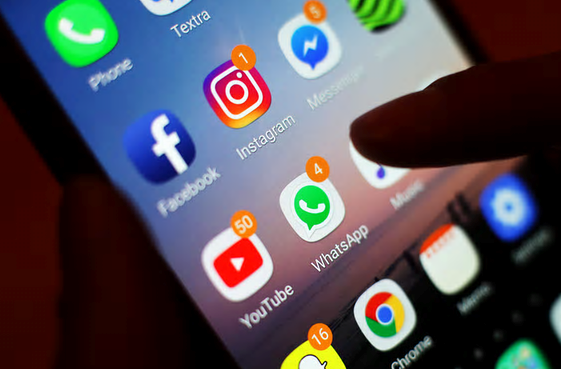
  • Only 24% of the UK population trust the likes of Twitter, Facebook and Instagram when looking for news and information, a survey has found.
  • At the same time, the survey found there had been a striking 13-point increase in support for traditional media, to 61% – the highest level since 2012.
  • The fear of fake news may explain why 42% said they only skimmed headlines on social media but did not click on the content and also the increase in support for traditional media
  • The Edelman trust barometer, the 18th annual survey, found 64% of 1,050 UK respondents worried that social media companies were not regulated enough, 69% agreed that they did not do enough to prevent bullying and 70% that there was insufficient action to stop illegal or unethical behaviour on networks.
  •  53% of people polled said they worried about being exposed to fake news on social media
  • The Edelman trust barometer, published on Monday, suggests the days when social media was championed as an enabler of citizen journalists and for its role in the Arab Spring have passed.
"Amy Orben, a social media psychologist and lecturer at Oxford University, said: “Social media companies are just experiencing what some of their more traditional rivals experienced at their launch. " I find this interesting as it can relate to newspapers and how they were once not a dying media.


NDM 31

Facebook should be 'regulated like cigarette industry', says tech CEO
- The Guardian


Facebook should be regulated like a cigarette company, because of the addictive and harmful properties of social media, according to Salesforce chief executive Marc Benioff. Technology has addictive qualities just like cigarettes do. Benioff, who founded B2B cloud computing company Salesforce in 1999, suggested that regulation of some form was inevitable for the technology industry.


I agree that it was inevitable for social media to require further regulation than it currently presents. I find it interesting how it is compared to cigarettes and that there are similarities in the sense that they are both addictive and there are different kind of forces trying to get you to do certain things.


Monday, 22 January 2018

NDM 30

Apple's Tim Cook: 'I don't want my nephew on a social network'
- The Guardian


This article talks about how Tim Cook doesn't believe that we should overuse social media and that he also doesn't let his nephew use social media. He is admired for his passion to do things other than for profit motive. It also mentions how introducing coding at an early age will help with gender diversity.
  • On Wednesday, Apple announced it would spend $30bn in the US over the next five years, creating 20,000 new jobs, a decision the US president attributed to his tax reforms.
  • (Apple is on track to be the first $1tn firm).
  • Of the reporting in the Paradise Papers, he said: “I think the press is essential to any functioning democracy. I’m a huge believer in it.”
This I think can be seen as a large company that is starting to use their power and influence to advocate issues that are prominent in society in terms of the DACA issue and LGBT rights and also gender inequality. This is refreshing to see.

NDM 29

YouTube's small creators pay price of policy changes after Logan Paul scandal
- The Guardian


This article focuses on the new rules that youtube has set for the creators after the Logan Paul scandal. People who talk about important issues are being flagged for being inappropriate whereas there are youtubers like Logan Paul who post videos of a dead body and doesn't get it taken down until he took it down himself all due to the backlash he received and not the involvement of Youtube. Youtubers like Armsortong has had their ad revenues drop from about $180 a month to as alittle as $30 leading her to give up on monetising her videos.
  • YouTube claimed that 99% of channels that would be demonetized under the new policy were already making less than $100 a year.
I feel like this new policy has brought new and unnecessary problems for the content creators that are trying to build up their channels and maybe even try to make a living out of it. This new policy allows the large channels to stay at the top because they already meet all the requirements that the new policy states. Therefore this raises questions on the democracy of the site and whether it gives other creators a fair chance.

January assessment: Learner response

1) Type up your feedback in full (you do not need to write mark/grade if you do not wish to).
WWW 
- There's definite potential here in the way you cover a range of different ideas and examples. Your pluralism paragraph is excellent - need to reach that standard more consistently

EBI 
- Overall this lacks depth and sophistication. You write a lot of short paragraphs that never offer enough for the higher levels. Look over your last couple of pages - very repetitive in paragraph structure
- Need sharper focus on question: Democracy and participation.
- Lacking theories and examples.

2) Read through the mark scheme (go to the last two pages of the document - Section B New/digital media). Of the six different statements for each level (e.g. A sophisticated and comprehensive essay, showing very good critical autonomy.) write which level you think YOU are currently working at for each one. Explain WHY and, for any that are not Level 4, what you are going to do to improve in that area. 

  • A good essay, showing good critical autonomy. (Level 3)
  • Proficient understanding of new and digital media. (Level 3)
  • Focuses mainly on the question. (Level 2)
  • A basic application of some media debates or issues or theories or wider context (level 1)
  • Evidence of a case study and supported by some examples. (level 1)


3) Look at the Examiners' Report for this particular paper. Read page 10 - Section B New/digital media. How many of the good points or higher level answer examples did you include in your essay? What were they? What could you have added to improve your mark?
To improve my mark I could've added more information using media issues, debates and wider contexts. I could have also included debates on the obstacles of equal participation and democracy including things like the power and control of media organisations. I also need to have more focus on the question and include as many examples from new and digital media.

4) Read through these exemplar A grade essays from previous Media graduates. What do these essays offer that yours does not? Identify THREE things you can take from these essays to improve your own responses in future.

  1. Consistent use of media terminology
  2. Consistent use of key words to help link back to the question throughout
  3. A lot of examples given
  4. Media Theories

5) Write ONE new paragraph for your January assessment essay. Ideally, this should be a section you did not cover in your original essay. This paragraph needs to be comprehensive and meet the criteria for Level 4 of the mark schemeMinimum 300 words.


Globalisation allows for the world to become more accessible and people are enriched by getting to know and understand it better. This also increases choice and the opportunities for people to feel empowered. The fact that we have access to information can allow us to make informed decisions when it comes to things like politics and other issues like the recent Logan Paul scandal which allowed many people from around the world to give their opinion after receiving information. The fact that a major platform like Youtube had to come to a middle ground with the audience, shows that the internet is becoming more of a democratic space and that other peoples voices are being considered and listened to. However, despite the benefits that globalisation brings this can’t be said for equal participation as these benefits are provided by a few major organisation. The fact that smaller companies have little to no hope of staking a claim on the global market as they won’t be able to compete with companies like Google, Facebook, Twitter etc. This could link to the idea of Marxism as a small number of large companies are controlling the wider audiences. We are given the illusion of power which can include the illusion that we have an equal participation in what goes on in the internet.
Identities and the Media: Reading the riots

Read the Media Magazine extended feature on the media coverage of the UK riots (MM38 page 5)

 
1) How did the language and selection of images in the coverage create a particular representation of young people? 
 
The representation of young people was immediately shown as negatively by using language like 'riots' instead of 'protests'. The word riot suggests things like wild and uncontrolled. They newspapers were using dramatic images of 'young thugs' for example the Daily Express calling them 'flaming morons'. Despite the fact that that youth offenders had declined of the years it became the main image of youth.

 
2) Why does David Buckingham mention Owen Jones and his work Chavs: the demonisation of the working class?
He mention Owen Jones' work because it links to the way working class people have been represented he mention show there has been 'a new form of class contempt'. The fact that they have become the object of fear and ridicule, not in just news but other media such as little Britain. Despite the fact that the majority of those convicted were those of middle class people who had respectable jobs.
 
3) What is the typical representation of young people – and teenage boys in particular? What did the 2005 IPSOS/MORI survey find?
40% of newspaper articles featuring young people focused on violence, crime or anti-social behaviour; and that 71% could be described as having a negative tone.
Particularly teenage boys were described negatively with word liked yob, scum, and heartless with a few stories describing them positively but only if they had died. This highlights the unbalanced representation of youth that in the majority of the time do not even have a say in the way they are represented in the media. 
 
4) How can Stanley Cohen’s work on Moral Panic be linked to the coverage of the riots?
His work links to the coverage of the riots as he believed that the media talks up the disturbances into a bigger 'moral panic'. They play a role in 'deviance amplification'. This was done reporting the events and expressing the fear and outrage of a 'respectable society'. This attracts people who may have not though of being involved.
 
5) What elements of the media and popular culture were blamed for the riots?
It was said that what provoked the riots was rap music, violent computer games or reality TV. The fact that rap music promotes hatred and violence for authority (especially police but including parents).
 
6) How was social media blamed for the riots? What was interesting about the discussion of social media when compared to the Arab Spring in 2011?
The rioters were skilled enough to co-ordinate their attacks through social media such as Facebook, Blackberry and twitter. They used social media to incite others to join in as well. However social media was seen as a positive thing when it seem to aid the revolutions that took place in Tunisia, Egypt and Syria.

 
7) The riots generated a huge amount of comment and opinion - both in mainstream and social media. How can the two-step flow theory be linked to the coverage of the riots? 
The two-step flow theory refers to opinion leaders and with this news coverage of this included different peoples account of what happened including politicians, community leaders, media commentators and 'experts'. This can bring attention to the situation if they can provide a simple cause/explanation for it.
 
8) Alternatively, how might media scholars like Henry Jenkins view the 'tsunami' of blogs, forums and social media comments? Do you agree that this shows the democratisation of the media?
They may see as a new way to promote the democratisation of the communication system as it allows people more than before to voice their opinion and let there take on the situation have a effect regardless of how small or big. Its part of the contribution to the noise that is generated. People take to different platforms to do so. I think this does in a way show more of a democratisation of media but not to the extent in which the Big Media' has now been finished as it is still those big organisations that decide what news is given importance whether it be through algorithms or simply the amount of coverage its given.
 
9) What were the right-wing responses to the causes of the riots?
The right-wing responses was leaning towards amoral youth. claiming that youth have become disrespectful and less appreciative and have a lack of 'moral compass'. Max Hastings claimed that "such young people live lives of 'absolute futility'"
Some right-wings believed it was ultimately the parents fault, whilst others thought it was the schools fault for failing to discipline and teaching respect to authority to the children.
 
10) What were the left-wing responses to the causes of the riots?
The left-wing responses were leaning towards inequality and poverty. The causes ranged from the cuts in the youth services and the rising in youth unemployment and also the removal of the education maintenance allowance. Capitalism can be seen as the problem too where politicians can lie and cheat and the people who are rioting are following this example.
 
11) What are your OWN views on the main causes of the riots?
 I think that what sparked the riots was the death of Mark Duggan but I also think the main causes for the riots were more due to the cause of inequality and poverty and the fact that people from the working classes were tired of not being treated fairly and the fact that their voices were always being put aside.
 
12) How can capitalism be blamed for the riots? What media theory (from our new/digital media unit) can this be linked to?
Capitalism can be blamed for this in the sense that we follow the example that is set by the senior and respected figures in society. This can be linked to Marxism and Hegemony in the sense that we follow the status quo.
 
13) Were people involved in the riots given a voice in the media to explain their participation?
At first there was a 'rush to instant judgement'. There were many people giving their opinion. I feel as if there wasn't an opportunity for the people involved in the riots to give their reasoning behind the riots before there was a set negative representation that had circulated around the media.
 
14) In the Guardian website's investigation into the causes of the riots, they did interview rioters themselves. Read this Guardian article from their Reading the Riots academic research project - what causes are outlined by those involved in the disturbances?
  • Opportunism - it seemed that normal rules had been suspended and there was an opportunity to acquire goods and luxury items that they could not afford.
  • Gang members - they played a role in the riots despite the effective four-day truce that was applied to towns and cities across England.
  • BBM - It was found that social media sites were nor exclusively and highly used during the riots but instead, popular at that time, Blackberry phones with the free messaging service BBM was used to organise and plan the riots in advance.
  • Political grievances - People who were rioting were for the injustice they were receiving, social and economic. Also education related issues like tuition fees and EMA.

 
15) What is your own opinion on the riots? Do you have sympathy with those involved or do you believe strong prison sentences are the right approach to prevent such events happening in future?
I think that the riots was an eye opener for how major operations work in the sense that they misinterpret and misrepresent certain things in society that in turn fuel further problems and dissatisfaction. The fact that it was made clear how these organisations think of the working class that could add to the inequality that they face. To an extent I have sympathy with those involved however the approach taken I feel was unnecessary. Burning and looting wasn't the best way in solving the situation. 


Wednesday, 17 January 2018

NDM 28

Digital connectivity is a force for social good. Charities must harness it
- The Guardian


This article talks about how different sectors including the charity sector are facing a digital transformation. this 'threatens the civil society' due to things like fake news that have affected referendums and elections. 'connectivity makes the extreme more visible, but it can also amplify the good work of charities.'


Video continue to dominate social media
- charities face enormous challenges in using social media strategically as communication channels.
According to the Global NGO Tech Report, only 32% of non-profit organisations have a written social media strategy.
Messaging and chatbots
- charities can use this as a way to communicate with supporters and vice versa. Platforms like Facebook allow bots at little cost to be designed to be of use.
In Liberia, for example, the bot asked 13,000 young people if their school teachers were exchanging grades for sex. Some 86% said yes, uncovering a widespread problem and prompting Liberia’s education minister to work with Unicef to tackle it.
Engaging mobile
90% of media interactions taking place via a screen, and 38% taking place on a smartphone
According to Reason Digital, charities missed out on an estimated £1.5bn of donations last year due to high bounce rates on mobile devices. People using mobile devices to view a charity website are more likely to leave after visiting one page, compared to users viewing from a desktop.


A social good is a service that benefits the largest number of people in the largest possible way. for example Journalism is considered a social good because it does just that and reaches a large audience. They provide quality news for the audience and it is a way for them to keep informed and up to date with the important things that are going on around them. So digital connectivity can be a social good as it is a way for people to keep up to date with the community and world around them. Therefore charities can benefit from this if they find the best strategy to boost their communication with people.

NDM case study Task 1: Media Magazine research

The first research task for your New/Digital Media independent case study is to use the Media Magazine archive. This is an invaluable re...